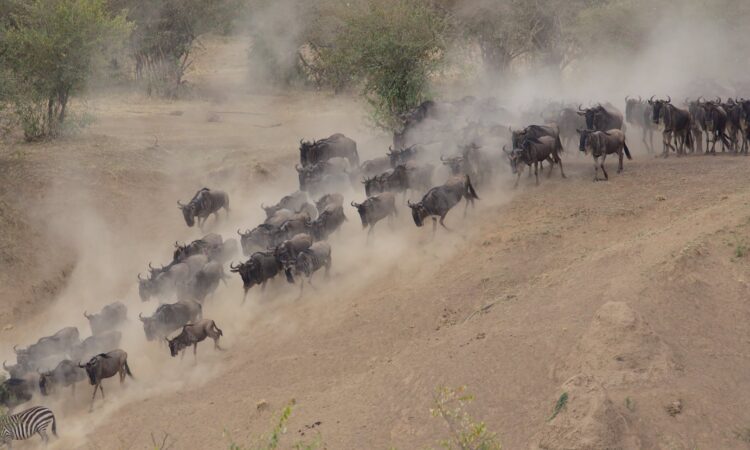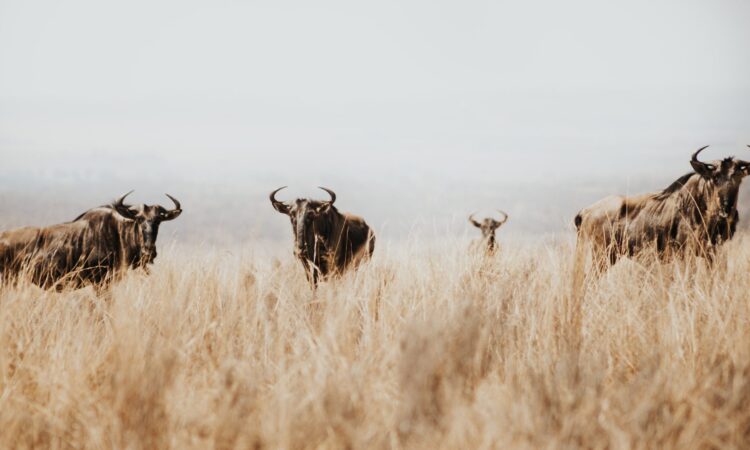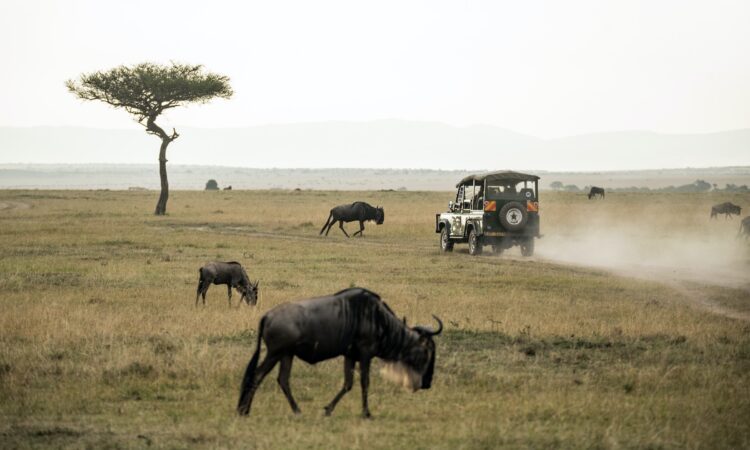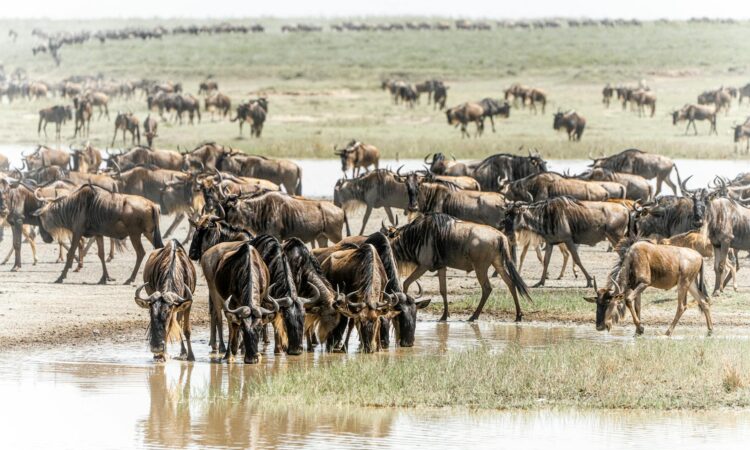
The migration happens every year and involves the movement of millions of wildebeests, gazelles, and zebras from Serengeti in Tanzania northwards to Masai Mara Reserve in Kenya. They mainly move in search of fresh grass and water.
The journey amazes visitors because it seems automatic, but some experts believe the movement is triggered by changes in the weather, while others think it’s connected to the calving season.
However, these ideas are not fully proven. What is clear are the months when it all happens.
Masai Mara National Reserve
July to September: The migration into Masai Mara begins in July and usually ends in late September. The exact timing is hard to predict until the first large herds gather at the northern edge of Serengeti near the Mara River. Sometimes these herds stay in one spot for days without crossing, which is why patience is important.
July to August: The best time to see the migration is from mid-July to late August. The movement happens over several weeks at different places along the Serengeti-Masai Mara border. August is often considered the peak month of the migration.
Serengeti National Park
The journey back into Serengeti usually starts in late October. This part of the migration is slower and less dramatic, but it gives photographers a good chance to capture the entire process.
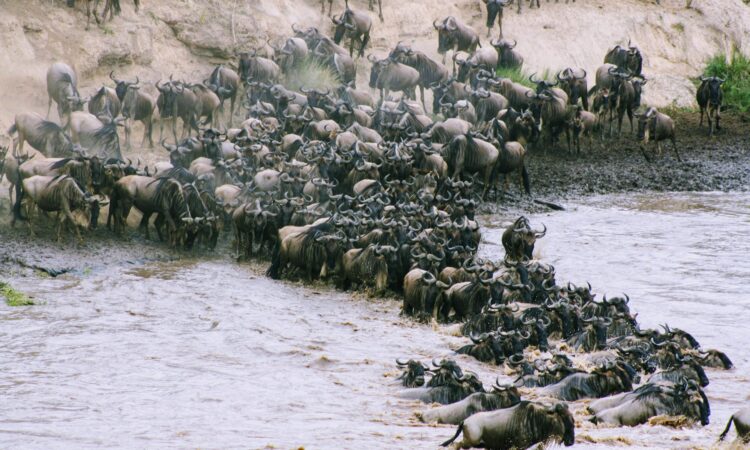
The river crossings are especially dramatic, with fast-moving water and crocodiles silently waiting for their prey.
This takes place mostly from late July to August, and sometimes into September. The herds make their way back around late October or early November, when the short rains begin.
They settle in the short-grass areas south and east of Seronera, around Ndutu, stretching into the Ngorongoro Conservation Area.
The cycle repeats itself every year. In January, February, and March, the calving season begins. By May, the herds move north to the Moru Kopjes area, staying for a while near the south side of the Grumeti River, which slows their movement north.
But this doesn’t stop them—they continue into the Grumeti Reserve and Ikorongo. By September, they are ready to face their biggest challenge: the Mara River. The cycle then wraps up in November.
Make Masai Mara and Serengeti your safari destination—you won’t regret it.
Prepare for a lifetime wildebeest migration by reaching out to our migration safari companies and experts or submit an inquiry below to start planning your unforgettable safari adventure with us.