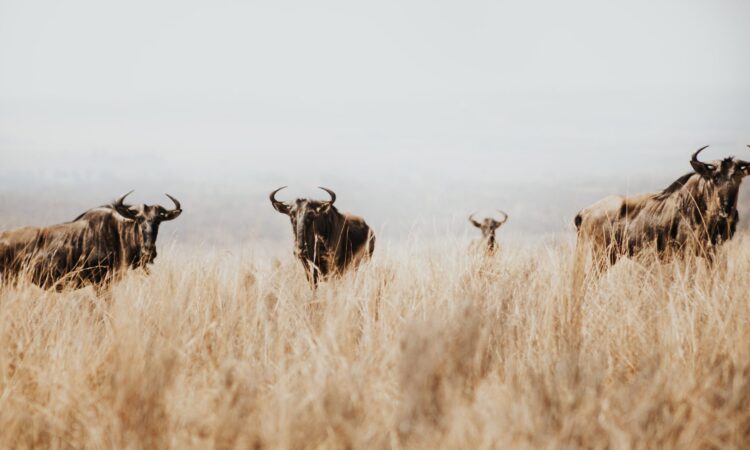
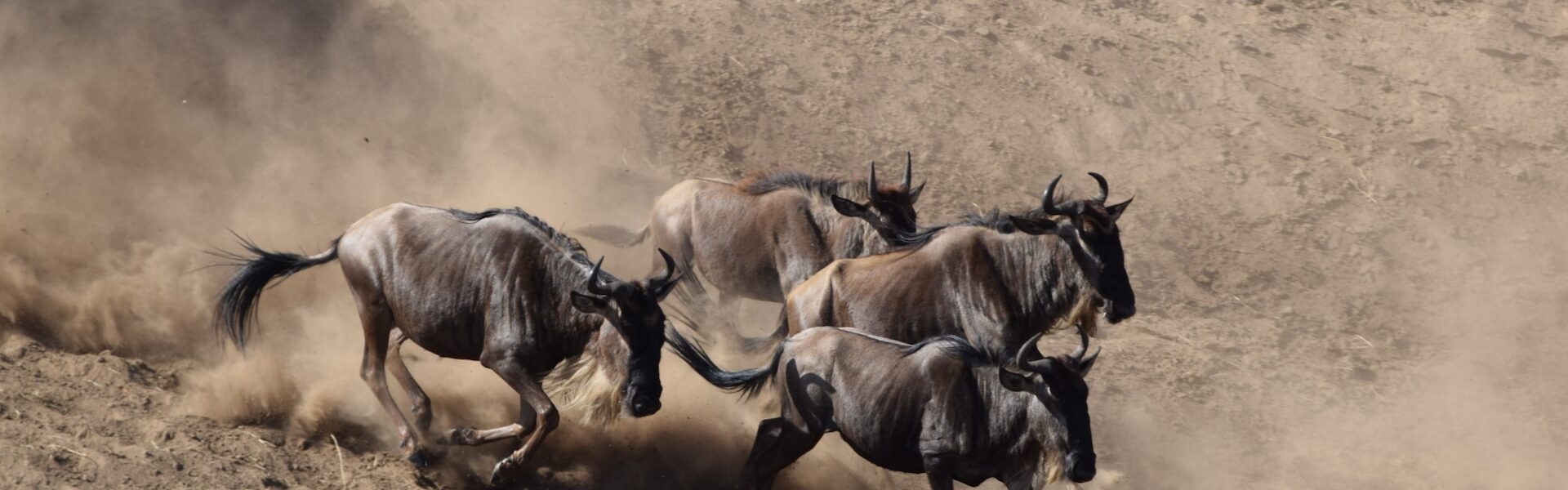
Short-sleeved shirts are recommended in February because the weather is very warm. Although there are light afternoon rains, they don’t stop curious travelers from watching the great wildebeest migration.
In this month, the mothers gather in the Ndutu plains, located south of the Serengeti, where the grass is green and plentiful, ready to give birth to a large number of calves. The sight of these newborns is delightful, as beautiful as a sunrise.
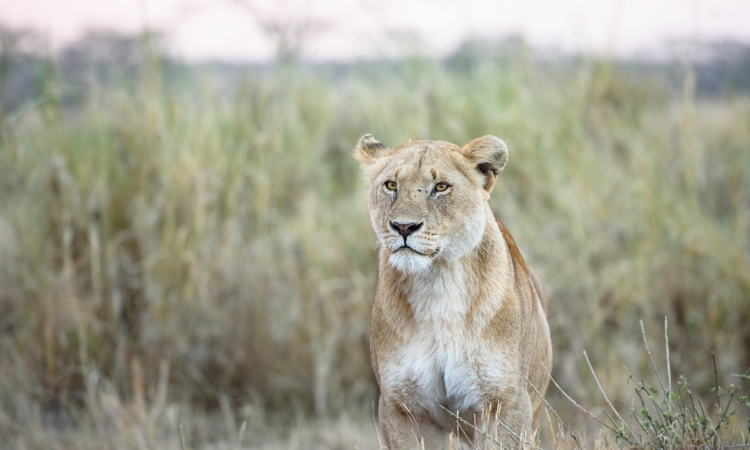
The calves, innocent and full of life, stand in the wild during this time. But predators are never far away, waiting for the chance to hunt. While this is harsh for the animals, it gives tourists a good opportunity to see the Big Five more easily.
The calves are eye-catching. Just minutes after birth, they begin walking and following their mothers, strong enough to keep up with the herd. This helps protect them from predators hiding in the bush.
By 10 days old, the calves start eating grass but continue nursing from their mothers for up to four months. A mother’s care is full of dedication, and mother wildebeests stay close together to look after their young until they are strong, even though females usually do not live in tight groups.
For accommodation, tourists can book:
- Serengeti Serena Safari Lodge, which offers a clear panoramic view and an infinity pool. It is part of the well-known Serena Hotels group.
- Serengeti Pioneer Camp, located in the heart of the Serengeti, with wide views and twelve unique luxury tents in a peaceful setting.
- Kati Kati Tented Camp, popular with adventure seekers, where you stay right in the middle of the action in mobile tents.
- Saruni Wild, great for those who enjoy meals by firelight under the night sky, with good chances to spot wild animals.
- Saruni Mara, located in a valley near Masai Mara National Reserve, offers comfortable double and single rooms, depending on your booking.
Tourists can enjoy activities such as camping, a favorite among adventure lovers because it involves sleeping out in the bush and enjoying bush meals while observing nature.
Hot air balloon safaris offer a bird’s-eye view of the wildebeests, and bird-watching is popular while waiting for the migration.
The best way to begin is to stop talking and start doing. Begin your February journey in the land of wildebeests and experience wildlife in a whole new way.
Plan your migration safari
Choose a tour that fits this guide, or tell us your dates and we match you to one. See all migration safari offers.