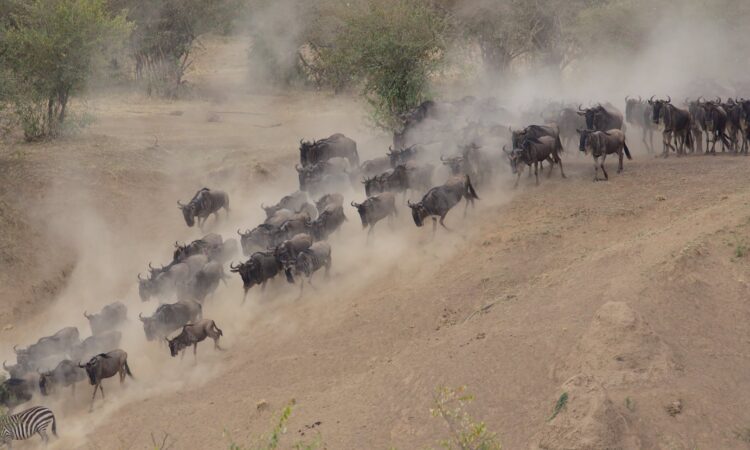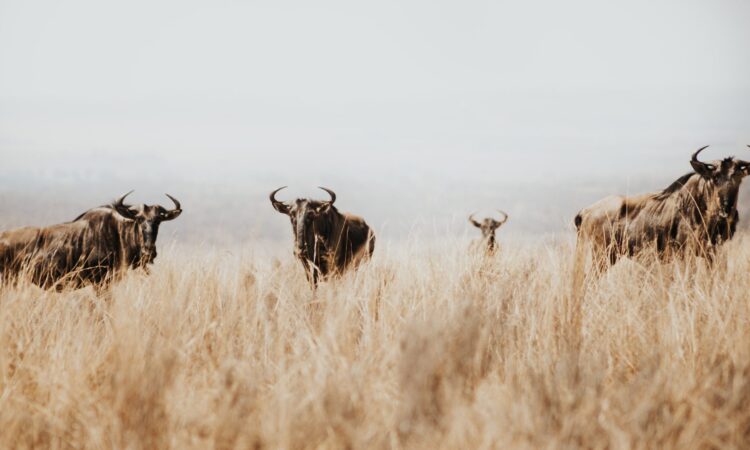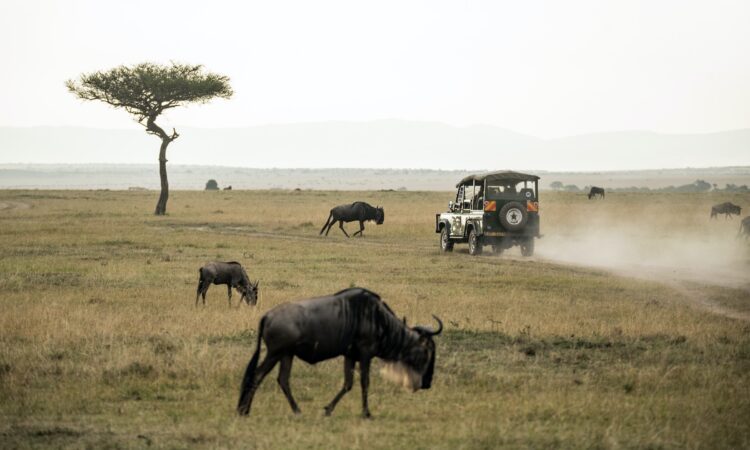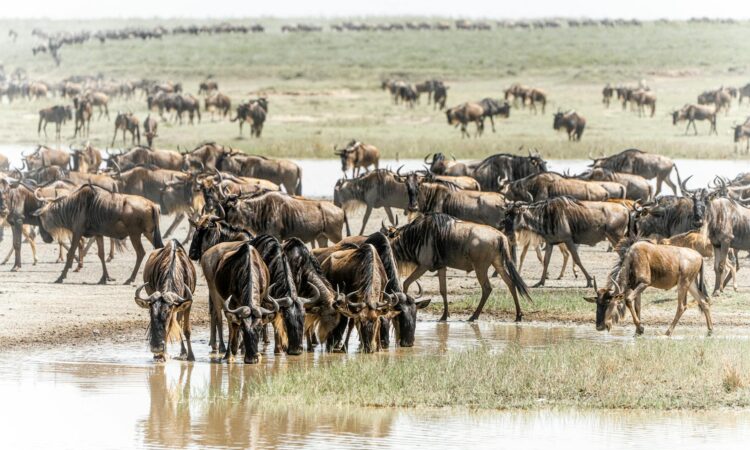
The wildebeest migration is an adventure you won’t want to miss in your lifetime. This event happens every year, with over a million wildebeests, along with gazelles and zebras, moving in large herds in a continuous cycle from Serengeti National Park in Tanzania northward into the Masai Mara National Reserve in Kenya.
The wildebeest migration routes are the paths these animals follow each year. The first route takes place in January, February, and March, offering a great chance to experience the wonders of nature at the start of a new year in a peaceful and cool environment.
It is always better to see it with your own eyes than to hear stories about how female wildebeests give birth and how weak calves are targeted by predators while the mothers fight to protect their newborns.
From April to May, the animals follow another route because of the dry season, continuing their journey through the western corridor of Serengeti National Park, heading north.
If you enjoy exploring new places, this is also a good chance to visit the Ndoha and Dutwa plains, located near the Mbalageti and Grumeti rivers.
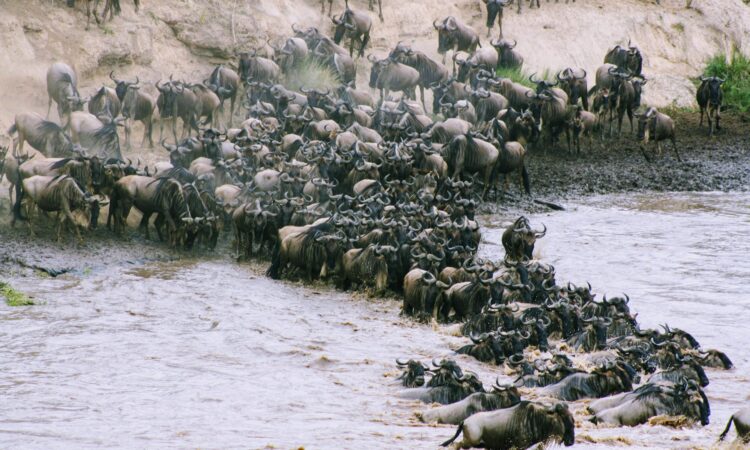
In June, July, and August, the herds take a new route, heading further north toward the fresher, greener grass of the Masai Mara National Reserve. But first, they must face challenges like crossing the Grumeti and Mara rivers.
When it’s time to cross, the herds gather in large numbers, preparing for the difficult task ahead. This part of the migration is not for the faint-hearted but offers an exciting and action-filled experience.
You will witness the reality of nature’s food chain, with crocodiles waiting in the water and predators on the riverbanks ready to hunt down any animals that make it across.
Another key route is between September and October, focusing mainly on the Mara River crossing. The experience here is quite similar to the Grumeti River crossing. Many visitors prefer this period, as it is one of the best times to visit the Masai Mara National Reserve.
The final route is when the surviving herds in Masai Mara, after feeding and finishing the grass there, begin their journey back to Serengeti National Park. By this time, Tanzania is receiving short rains, and new grass has started to grow, allowing the cycle to begin all over again.
Each route offers something special and exciting. Don’t miss the chance to join a safari in Tanzania or Kenya to witness the wonders of the natural world.
Prepare for a lifetime wildebeest migration by reaching out to our migration safari companies and experts or submit an inquiry below to start planning your unforgettable safari adventure with us.