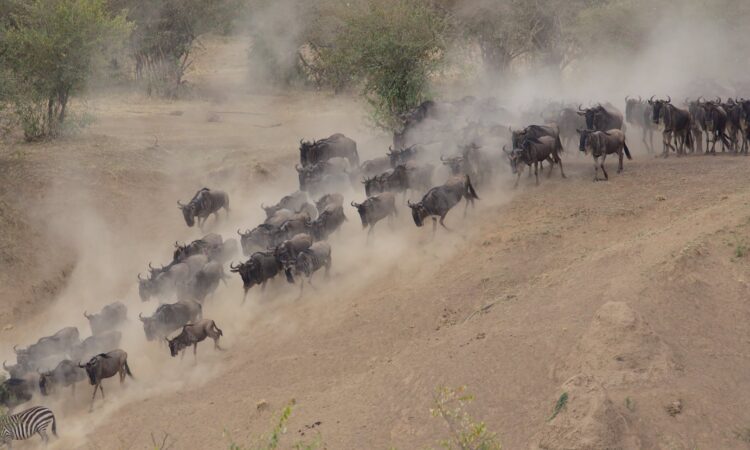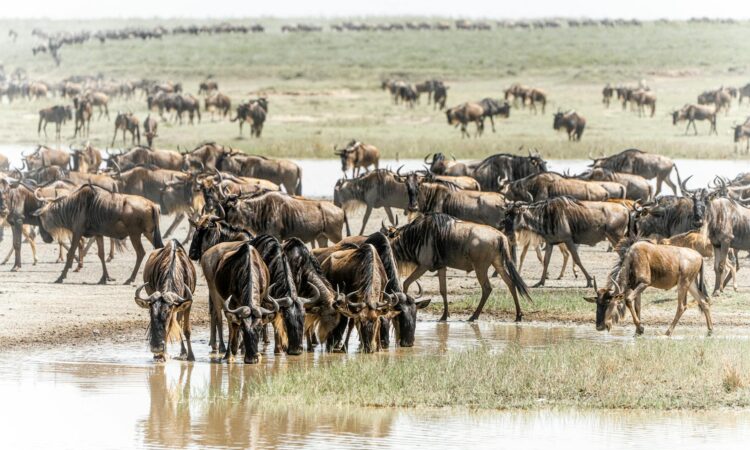
Migration is a dangerous journey, with about 250,000 wildebeests and 30,000 zebras losing their lives each year, often due to drowning, hunger, predator attacks, or exhaustion. However, many survive, with zebras making up around 200,000 of the survivors.
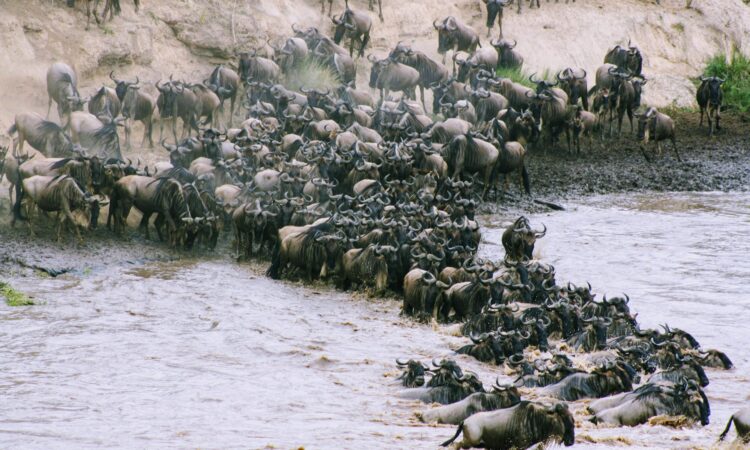
The wildebeest migration takes place from June to October, during the dry months when the vegetation dries out. This pushes the herds to cross into Masai Mara through the Mara River, and the crossing is not completed in a single day—it takes several days.
The calving season makes the migration even more intense, with about 400,000 calves born during this time. This increases the need for fresh grass, and the herds keep moving, usually accompanied by zebras and gazelles, including Thomson’s gazelles and Grant’s gazelles.
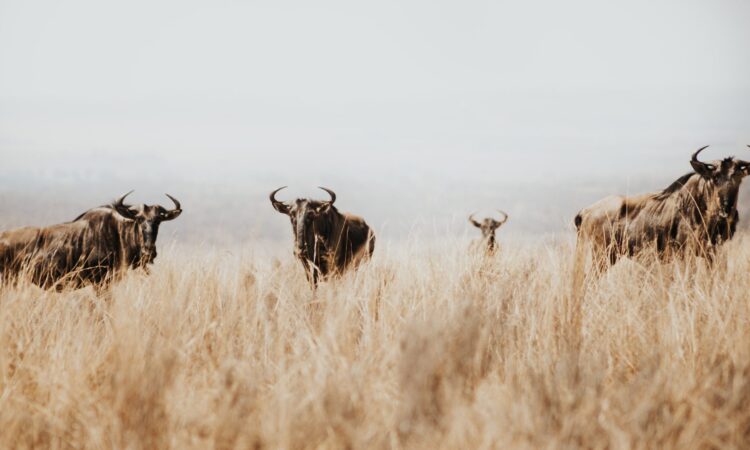
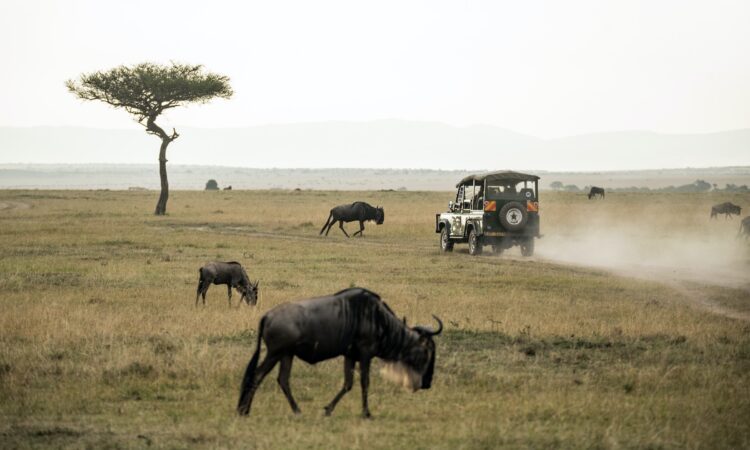
Wildebeests are known for their large, box-shaped heads with curved horns and strong front bodies, while their hindquarters are slimmer with thin legs.
The migration starts in Serengeti National Park and ends in Masai Mara National Reserve, with crocodiles staying alert year-round, waiting to catch wildebeests or zebras.
Visitors can enjoy several activities, including:
Camping
Campfires are lit at night, stories are shared, and guests watch the wildlife nearby. This activity is popular because it’s hands-on, allowing visitors to sleep out in nature.
The camps are comfortable, with clean bedding, and both local and international meals are served (bush meals).
Guests are always advised to bring jackets, insect repellent, and a first aid kit. It’s also important to avoid urinating near the camp, as animals like lions can pick up the scent.
Nature Walks
Nature walks are good for your health and give you the chance to explore the park on foot. These walks are guided by an armed tour guide and are done at a safe distance from the animals.
Before you start, the rules are explained clearly, including:
- No littering, as animals may eat plastic or other harmful materials.
- No loud noises, as these can scare animals and disturb their routines.
- Never feed the animals.
Whether you are on a nature walk or any other safari activity, it’s very important to follow all safety instructions.
Come and experience the wonders of nature by visiting Africa for the wildebeest migration, and you’ll gain a new understanding of this incredible event.
Prepare for a lifetime wildebeest migration by reaching out to our migration safari companies and experts or submit an inquiry below to start planning your unforgettable safari adventure with us.