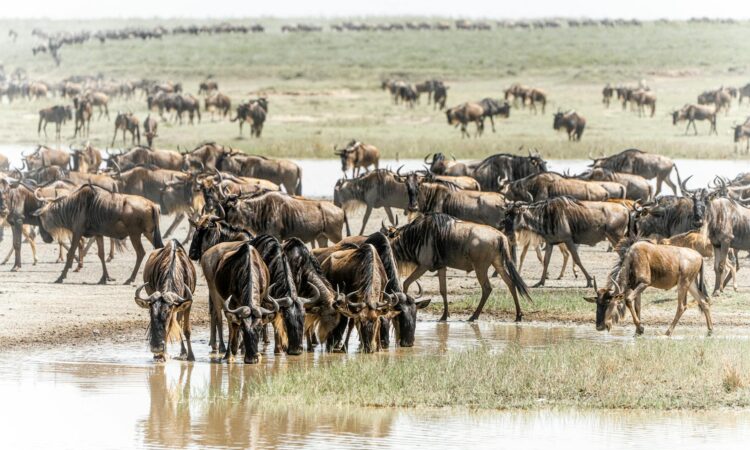
Planning to witness the famous wildebeest migration safaris in Kenya, known as the greatest show on earth, involving over 2 million wildebeests, zebras, and gazelles crossing between Tanzania and Kenya. Want to learn about the journey's risks from predators like crocodiles and lions, as well as the joy of calving and mating. The migration's unpredictability and various locations it passes through in Tanzania and Kenya are highlighted, with tips for planning safaris and witnessing river crossings. Discover the migration timelines, tourist activities, birdwatching, visiting Maasai communities, and recommended lodging options for viewing river crossings. See some of our Kenya migration safaris below.
Kenya Wildebeest Migration Safaris – Experience the Masai Mara Spectacle
-
 On Offer
21 Days/20 Nights Vacation in Kenya (Best Kenya Vacation)
View packageGet the most of Kenya’s natural wonders on our exceptional 3-weeks Vacation in Kenya. Explore the country’s iconic national parks…
- On Offer
10 Days Best of Kenya Wildebeest Migration Safari, Wildlife, Culture & Leisure Tour
View packageThis 10 Days Best of Kenya Wildebeest Migration Safari, Wildlife, Culture & Leisure Tour is an amazing tour package.
- On Offer
12 Days Vacation in Kenya, Wildlife, Culture & Leisure Tour
View packageBe part of those who have good rest and tell a holiday story. Tell friends, family, and wonderers what it…
- On Offer
18 Days Spice of Kenya Safari (Ultimate Kenya Adventure Tour)
View packageThis 18 Days Spice of Kenya Safari is designed for Kenya Wildlife lovers and beach holiday-makers to the coast of…
- On Offer
4-Day Masai Mara Wildebeest Migration Safari & Wildlife Tour
View packageBook this 4-Day Masai Mara Wildebeest Migration Safari Tour Kenya to visit wildebeests and wildlife animals in Kenya.
- On Offer
15 Days Kenya Adventure Safari, Adventure Travel in Kenya
View packageHave a great time during this 15 Days Kenya Adventure Safari (Adventure Travel in Kenya) where you will visit different…
- On Offer
7 Days Masai Mara Safari Kenya & Diani Beach Holiday Tour
View packageYour 7 Days Masai Mara Safari Kenya & Diani Beach Holiday Tour will be spent visiting two of Kenya’s most…
- On Offer
5-Day Masai Mara Wildebeest Migration Safari & Lake Nakuru Safari
View packageThis 5-Day Masai Mara Wildebeest Migration & Lake Nakuru Safari takes you to two of Kenya's famous parks.
- On Offer
6-Day Masai Mara & Samburu Wildlife Safari in Kenya
View packageTake this ultimate 6 Days Masai Mara & Samburu Wildlife Safari in Kenya and explore East Africa’s iconic destinations such…
- On Offer
7-Day Kenya Wildebeest Migration Safari to Masai Mara, Lake Nakuru & Amboseli Tour
View packageThis 7-Day Kenya Wildebeest Migration Safari to Masai Mara & Amboseli Tour is an all-inclusive perfection.
- On Offer
3 Days Masai Mara Flying Safari Tour & Helicopter Tour
View packageLet’s enjoy the Masai Mara national reserve after your booking through game drives while searching for the best wildlife in…
- On Offer
6 Days Masai Mara & Amboseli Wildlife Safari in Kenya
View packageThis tour is designed to visit only two protected areas that are filled with the magic of Kenya. There will…
- On Offer
6-Day Masai Mara & Aberdare Wildlife Safari in Kenya
View packageThis 6-Day Masai Mara & Aberdare Wildlife Safari in Kenya in the East of African continent offers a rewarding wildlife…
- On Offer
3-Day Masai Mara Wildebeest Migration Camping Safari
View packageThis 3-Day Masai Mara Wildebeest Migration Camping Safari is the most popular Kenya migration tour.





The famous wildebeest migration safaris in Kenya
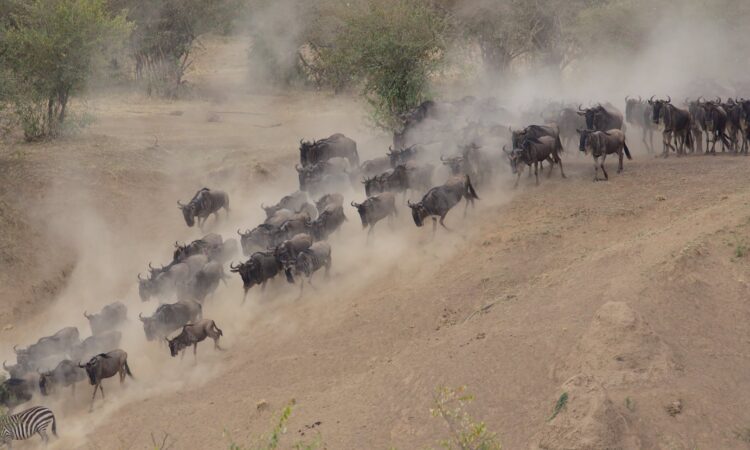
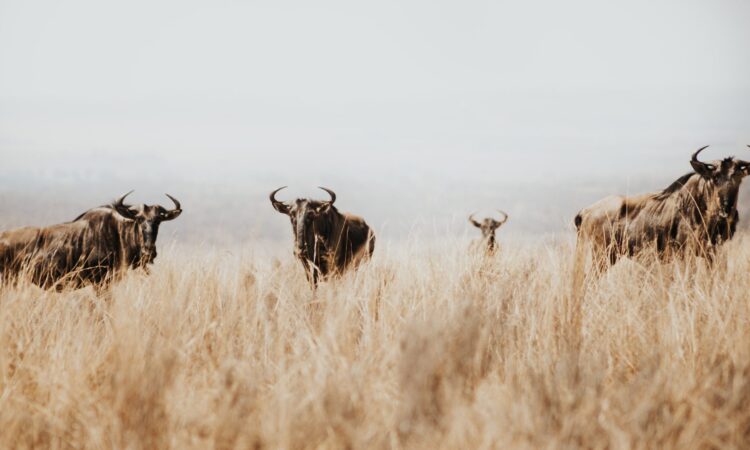
Migration is clearly understood by humans because they keep moving across different places for better opportunities. This migration is also referred to as the greatest show on earth because over 2 million wildebeests moving together with mega herds of zebras, and gazelles cross borders back and forth between Tanzania and Kenya.
This expedition is a collection of full mystery of the herds risking their lives through the hands of deadly predators like crocodiles, big cats like leopards, lions while on their way to collective joy that comes along with calving, mating, reforming and having hope, courage and strength to make it to the other end of the journey alive. This migration is clearly unpredictable because wildebeests tend to change timing and routes used while crossing over. Travelers who chance spotting the dramatic session where the animals are on a task to cross a river witness the gem of the month and for anyone who wouldn’t wish to miss this life changing experience should aim at camping at two or three different locations along the migration route.
Places where the great wildebeest migration takes place apart from Kenya.
Clearly these herds cross borders between Tanzania and Kenya therefore tourists can camp from either the set off stage or the receiving end in order to boast about spotting the greatest migration of all times on earth and the following areas will give you an exclusive excursion of the greatest of all migrations.
Ngorongoro conservation areas and Ndutu plains in Tanzania.
South of Serengeti borders the Ndutu plains found in Ngorongoro conservation area and this area is beautified by the vast savannah plains mixed with the acacia woodlands. During the calving seasons of January to March, it is best to camp in these areas and take a glimpse on the move with thousands of newly born calves.
While the migrators are too focused on their journey, predators are also busy with their math on how to prey on these young calves on their most vulnerable time. Lake Ndutu is a great mixture in this equation as not only does it feed flamingos, but also hydrates wildebeests during their expedition.
Getting visitor’s eyes away from the herds, is the landscape in these plains which is exquisitely gorgeous and breath taking views from paintings on the kopjes and the historic Olduvai Gorge don’t leave visitors the same.
Central Serengeti and the western corridor
The heart of Serengeti park is blessed with River Seronera which happens to be a perennial river. As the rains don’t hesitate falling in April, the mega herds find their way out of the plains in the south and sort out their lives from the central region. This region has plenty and permanent water sources hence tourists surely get great sights from a good deal of wilderness with herbivores exposed in abundance like zebras, gazelles, other animal residents in this region include lions and leopards.
Lake Magadi brings joy to visitors with sights spread by flamingos. Tourists in this region also lose agape on the simab kopjes and landscape that featured in the famous Lion King movie. These prestigious rocks and caves have always been darling to the ancient people of Masai.
Northern Serengeti and Mara River
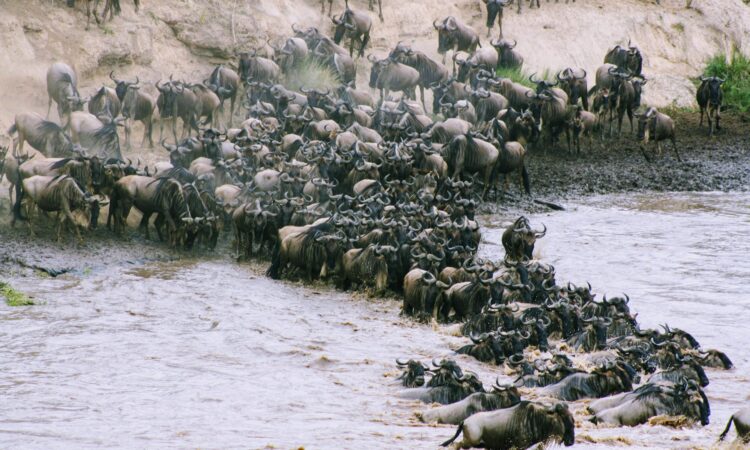
The famous and dramatic river crossing by the migrators ensues at River Mara that flows over the northern edge of the Serengeti. Before crossing the river, the animals continue their journey through the famous Ikorongo game reserve via Kogatende and Lamai areas.
This is usually between the July and August and during this period, the predators are also spotted easily as they are calculating on when to prey on the readily available animals.
Eastern Serengeti
Around October to November, the animals resume their journey once more heading south enroutes Loliondo and Lobo areas. Glimpsing at the migration in this area and time is like a miracle since it’s a low season but tourists can catch sight of great wildlife of other animals.
Ol Doinyo Gol is an active volcano and relatively small compared to the famed Kilimanjaro but it puts the animals on a huge task of climbing it for almost a full day but the region is blessed with water flowing from Lake Natron to quench the thirst of the tired herd. This lake gives views of thousands of flamingos breeding on it and the dried lava that has flown over the grasslands is a great tourist attraction as well.
Great wildebeest migration in Kenya’s Masai Mara reserve.
Going through this region is one of the most chaotic experience in the whole expedition as animals are always desperately eager to make a successful crossover through Mara River without being threatened by crocodiles that lie low be eagerly waiting for their prey to come closer.
The Masai Mara National Reserve hosts these great animals between August and October in their prime savannah that make up the greater Serengeti ecosystem.
Why wildebeest migration happens in Kenya?
This migration can be compared to crop rotation that farmers use to have enormous harvests in different seasons. This is because each year over two million wildebeest together with other grazers like Topis, zebras, Gazelles collaborate and arrange a migration at the end of the rainy season in search for greener pastures.
The search for greener pastures comes with a lot of challenges but these mammals are always ready to overcome them and they keep following trails that lead them to greener pastures following a circular rotation through Serengeti and the Maasai Mara ecosystem.
Tips for planning the migration safari in Kenya.
There are various regions that tourists should carefully and thoughtfully consider while choosing a place to camp in to view this beautiful excursion between the two countries in which it transpires.
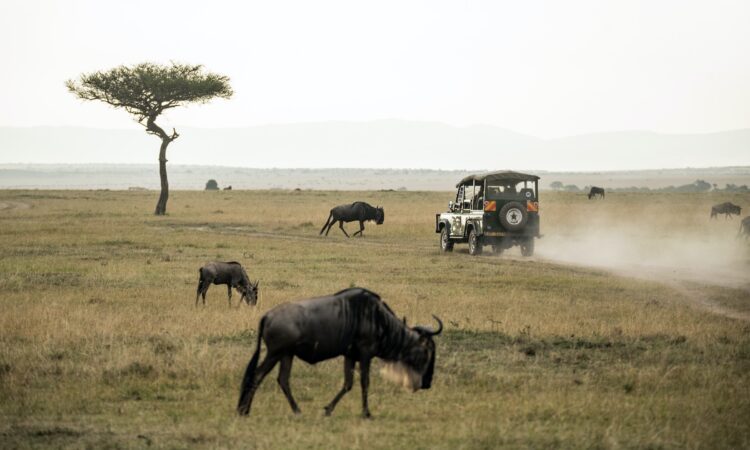
Tourists who wish to have a pocket friendly migration safari shouldn’t have second thoughts in booking a safari to Masai Mara national reserve in Kenya. This is usually cheaper compared to Tanzania because the country has more flight options, variety of affordable accommodation and competition is really stiff.
Travelers who hate crowds should opt for Tanzania’s Serengeti national park because it is way bigger than the Masai Mara and has massive collection of lodges and camps. This gives tourists the chance to visit multiple locations unlike in Kenya where the migration seasons are shorter.
Tourists interested in spotting this amazing natural phenomenon should book their safaris in advance. Competition is so stiff especially for hotel rooms hence tourists should book nearly a year before actual time of viewing beasts crossing over since hotels and lodges get filled up so fast.
The chaos and disorderly nature doesn’t happen to only animals migrating therefore tourists should clearly arrange their safari with a professional and registered tour operator. Basically one with much experience is familiar with how the whole system of migration transpires.
Tourists should be careful as they are booking particular dates for their activity.
This is entirely paramount because it is easy to miss important phenomenon like watching wildebeests giving birth or watch animals cross over the rivers. Therefore, it is advised that tourists book days that fall in between the end of July to the middle of October.
The fantasy of great migration is the river crossing therefore tourists should plan in advance for this mesmerizing sight so that they do not miss out on a long living memory gotten from this incident.
Tourists who travel with their lovely babies should endeavor having a private car for a game drive and also ensure the accommodation booked is fenced to provide extra security to the young ones.
It is also recommended that tourists combine the prestigious migration with other tourist activities like visiting the Ngorongoro crater, the Tarangire and other rift valley lakes that can be caught sight of by tourists while in the park.
Interesting facts about the wildebeest migration safaris.
- Wildebeest migration is both the longest and largest animal migration over land. This is because over two million mammals that include 1.5 million wildebeests, over 200,000 zebras, gazelles, elands and impalas cross over a total of 900km in a complete cycle.
- The newly born calves start walking as soon as possible. While most of the newly born have a period of darling time in which they are taken care of by their parents, wildebeests don’t have that time during migration hence their calves immediately walk as soon as they are put on earth to keep up with the speed of expedition.
- Wildebeests express a sense of intelligence during the migration journey. This has been classified as swarm intelligence where they use the saying that two heads are better than one and hence collectively collaborate so that they go through a certain obstacle together.
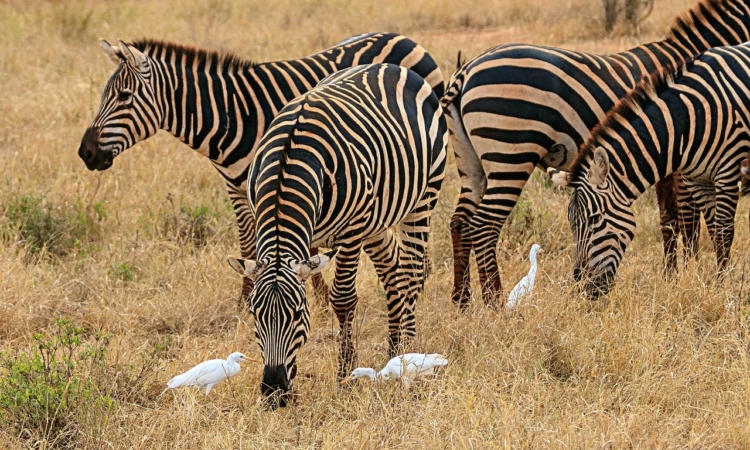
- There is peace and harmony among different species. Wildebeests move along with other animals like zebras, gazelles all looking for better pastures but they can never clash during feeding because all the animals feed on different parts of the same grass.
The worldly spoken of migration goes through a circular journey that happens throughout the whole year. The herds of wildebeest move from Serengeti to Masai since the year begins till end of year.
It is not certain when the animals showcase the most epic scene of crossing rivers, but it’s predicted that it falls between May and August.
This expedition defines a natural cycle of life. This is because a great deal of animals loses their lives during this phenomenon due to hunger, thirst, stampedes, attacks from carnivores that follow them like lions, cheetahs, leopards and hence over 250,000 animals and 30,000 animals are feared dead annually.
Best time to go for Kenya Migration safaris.
Kenya great migration is an all year round phenomenon which means that tourists are likely to spot on large herds moving at any point in time but the peak seasons are months of July to October and this comes with the sighting of great phenomenon as mammals cross Mara river.
Month by month breakdown of the great migration.
December to April
The best place to be during these four months is the northern region of Serengeti national park that sees both the herd through Ndutu plains and Ngorongoro plains. February gives tourists a chance to witness wildebeests giving birth because it is calving season.
During February, the predators are not settled because they are always eager to prey on the young ones. End of March and beginning of April gets the beasts ready to match towards the central and western Serengeti regions.
May to June
Huge columns counting up to 40 kilometers are all covered by these wildebeest as they move away from the central and western parts of Serengeti heading to the north. This is the river crossing period since rainy seasons are almost phasing out and the water levels are expected to reduce especially in River Grumeti where crossing this river is a tag of war compared to crossing Mara River due to the presence of crocodiles.
July to September
These months are among the hardest because they still involve crossing another River for those that have survived River Grumeti. August survivors continue north and they start peering into Kenya through the Masai Mara national reserve.
The climax of this migration is spotting the herd cross over river Mara and the victorious ones’ start enjoying the lush greenery in Mara plains.
October to November
The goal is to look for better pastures hence even this period, the animals are on the move again heading south enroutes Loliondo and Lobo. The animals are heading to this region because the November rains have now begun hence they settle in Eronera, Mawe and Mbuze valleys where water is in plenty. As the year comes to an end, calving occurs again and the whole cycle is repeated over and over again and lists the phenomenon among the 7 wonders of the world.
Other activities to do in Kenya apart from great migration safari.
Hot air balloon safaris
Tourists chance getting into high spirits because of sighting the whole park, its neighbors and the wildebeests while floating in air with a hot air balloon. The beauty about this safari is that after a long trip off the grounds, it definitely ends well with a breakfast of tasty flavor of champagne.
Meals in the bush
There is nothing as soothing, relaxing and refreshing as the cool air brought by freshness of swinging trees in a forest. Therefore, visitors can have their dinner while listening to the sweet sounds produced by insects, birds chirping and animals feeding.
Visiting other prestigious places.
Tourists who have heard about Zinjathropas shouldn’t miss visiting Olduvai Gorge that history puts in the limelight for holding dear the remains of the very first humans. This cradle of mankind has a lot to inform the tourists about humans aside the history it holds through the research base that was created by the Leakey family.
Birding
Over 542 bird species are found in this park that include migratory birds, endemic species and other birds. Some of the bird species to search for while in the park include the vultures, red-backed scrub, secretary birds, and Kori bustards among others.
Visit the Masai communities / villages
One of the staunchest groups of nomadic pastoralists are chanced by tourists who choose this safari. Similarly to the wildebeests, these pastoralists also move along with their beloved cattle to different places in search for water and greener pastures. Their love for brightly colored attires on their tall stature leaves the visitors mesmerized.
Visitors will leave this expedition with some information on how these native people hunt, cook, make fire and enjoy their day to day life generally.
Best places to stay in during river crossing.
Grumeti Serengeti tented camp
While the animals are determined to cross the risky river of Grumeti, tourists are also eager to enjoy these rare views and this camp established on the tributaries of the river provides tourists with all the chances of spotting this wondrous sight. The beauty about this camp is that it serves both children and adults with its exquisite rooms that have private verandas.
Away from the migrating wildebeests, visitors can’t miss spotting nocturnal species like hyenas, lions and other mammals like hippos.
Singita faru faru lodges
Luxurious / high end visitors have a spot that was established in the heart of nature to sooth the minds of visitors and offer a type of relaxation that exceeds clients’ expectations. The lodge boasts offering lots of tailor made services but above all, the epic views of hills rewarded from the magnificent windows. As well one can view River Grumeti and the nature generally that leave the spirits of visitors high and gets them wanting for more.
Sayari camp
Northern Serengeti campers have a glam of luxurious stay and rest that is gotten from this camp giving tourists an opportunity to gaze at wildebeests as they cross over the glorious Mara River.